1. Direct Measurement (for nearby stars):
* Interferometry: This method involves using multiple telescopes simultaneously to create a virtual telescope with a much larger aperture. This allows astronomers to measure the star's angular size (the apparent size as seen from Earth) with greater precision. By knowing the star's distance, we can then calculate its actual diameter. This method works best for nearby, large stars.
2. Indirect Methods (for more distant stars):
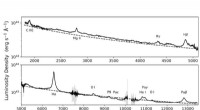
* Stellar Models: By analyzing a star's spectrum (the light it emits), astronomers can determine its temperature, surface gravity, and chemical composition. This information can be used to build a theoretical model of the star, which predicts its size based on established physical laws.
* Eclipsing Binary Systems: These systems consist of two stars orbiting each other, where one star periodically passes in front of the other (an eclipse). By observing the changes in brightness during these eclipses, we can determine the stars' relative sizes. This method is very accurate but requires a specific type of binary system.
* Luminosity and Temperature: Stars emit light based on their temperature and size. If we know a star's temperature (from its spectrum) and its luminosity (how much light it emits), we can use the Stefan-Boltzmann law to calculate its diameter.
* Spectroscopic Parallax: This method is based on the relationship between a star's spectral type and its absolute magnitude (intrinsic brightness). By comparing the observed magnitude of a star with its predicted absolute magnitude, we can determine its distance. Knowing the distance and apparent magnitude, we can then calculate the star's luminosity and subsequently its diameter.
Key Challenges:
* Distance: Measuring the distance to stars accurately is crucial for determining their sizes. The further away a star is, the more uncertain its distance measurement, making it difficult to calculate its diameter precisely.
* Stellar Variability: Many stars exhibit changes in brightness and size over time, which makes it difficult to determine a fixed diameter.
* Observational Limitations: Telescopes have limited resolution, making it challenging to directly measure the angular sizes of small or distant stars.
In Summary:
Determining a star's diameter involves combining various observational techniques and theoretical models. While direct measurement is possible for nearby stars, indirect methods are often necessary for more distant ones. The accuracy of the diameter measurement depends on the quality of the data and the specific methods used.