* Distance: The Moon is very far away, averaging about 238,900 miles (384,400 kilometers) from Earth. Even the most powerful telescopes can only magnify objects so much before the image becomes blurry due to the limitations of optics and the Earth's atmosphere.
* Resolution: To see small details, you need high resolution. The human eye can only see so much detail, and even telescopes have limitations. The resolving power of a telescope is determined by its aperture (the diameter of its lens or mirror). Larger telescopes have better resolving power. However, even the largest telescopes on Earth can only resolve features on the Moon that are roughly 1 kilometer (0.6 miles) wide.
* Lighting: The Moon's surface is illuminated by the Sun, and the angle of the sunlight can create shadows and make it difficult to see details. The best time to see surface features is during a full moon when the Sun is directly overhead, but even then, details can be obscured by shadows.
* Earth's Atmosphere: The Earth's atmosphere distorts light as it passes through, which blurs images of celestial objects. This effect is more pronounced for objects that are low on the horizon, so seeing details on the Moon can be difficult even with powerful telescopes.
* Natural Features: Some lunar features, like craters and mountains, are difficult to see because of their scale and relative smoothness.
However, with the right technology and conditions, some features on the Moon can be seen:
* Powerful Telescopes: Telescopes like the Hubble Space Telescope, while orbiting Earth, can provide incredibly detailed images of the Moon's surface.
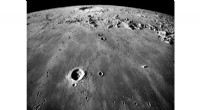
* Lunar Reconnaissance Orbiter: This spacecraft has been orbiting the Moon since 2009 and has taken incredibly detailed images of the surface, revealing features as small as a few feet across.
In conclusion: While it's not impossible to see some lunar surface features with powerful telescopes, it's a challenge due to the distance, limitations of optics, and other factors. However, with specialized technology and advancements in space exploration, we are able to see the Moon in increasing detail and make new discoveries about its surface.