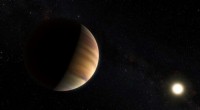
1. Stars are much brighter than planets: Stars are incredibly bright, and planets are comparatively dim. It's like trying to spot a firefly next to a searchlight! This makes it difficult to directly image planets, especially if they're close to their star.
2. Planets are small and far away: Even large planets are tiny compared to their host stars, and they're often billions of miles away. This makes them appear as faint specks of light, nearly impossible to distinguish from background noise.
3. Limited technology: While telescopes are getting more powerful, detecting faint planets directly is still a major technical challenge. We need instruments with incredible sensitivity and resolution to overcome the glare of the host star.
4. Planets move slowly: Planets orbit their stars at relatively slow speeds, making it difficult to track their movement and distinguish them from background stars.
5. Planet's atmosphere: Even if we can image a planet, its atmosphere can scatter and absorb light, making it difficult to determine its composition and characteristics.
Overcoming the Challenges:
Despite these difficulties, astronomers are employing ingenious techniques to find and study exoplanets:
* Indirect methods:
* Transit method: Detecting the slight dimming of a star as a planet passes in front of it.
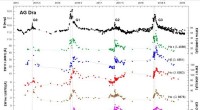
* Radial velocity method: Measuring the wobble of a star caused by a planet's gravitational pull.
* Microlensing: Using the gravity of a star to magnify the light from a distant star, revealing the presence of a planet.
* Space-based telescopes:
* These telescopes are shielded from Earth's atmosphere, offering clearer views and reducing background noise.
* Adaptive optics:
* This technology helps to compensate for atmospheric distortion, improving the sharpness of images.
While directly imaging exoplanets remains challenging, these innovative methods are leading to incredible discoveries, expanding our understanding of planetary systems beyond our own.