Planets and Moons with Increased Radioactivity:
* Jupiter: Jupiter's core is thought to contain large amounts of radioactive elements like potassium-40, uranium, and thorium.
* Uranus and Neptune: These ice giants are also likely to have significant amounts of radioactive elements in their cores, contributing to their internal heat.
* Earth's Moon: The lunar regolith (surface dust) is slightly more radioactive than Earth's surface due to constant bombardment by cosmic rays.
* Mars: While Mars's core is less radioactive than Earth's, there's evidence suggesting that it might be more radioactive than previously thought, contributing to its past volcanic activity.
Other Celestial Bodies with Notable Radioactivity:
* Neutron stars: These incredibly dense remnants of collapsed stars have extremely high levels of radiation, including gamma rays and X-rays.
* Supernova remnants: The aftermath of a supernova explosion can contain a variety of radioactive elements produced during the explosion itself.
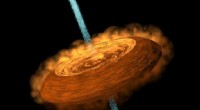
* Active galactic nuclei (AGN): These supermassive black holes at the centers of galaxies emit intense radiation due to the accretion of matter.
It's crucial to remember that "radioactive" in astronomy doesn't necessarily mean dangerous. Even the "radioactive" planets and moons are not necessarily emitting levels of radiation that would be harmful to humans. The radioactivity contributes to their internal heat and other processes but doesn't necessarily make them hazardous.
Here are some key points to consider:
* Naturally occurring radioactivity: All celestial bodies have some level of natural radioactivity, just like the Earth.
* Isotopes: The amount of radioactivity depends on the presence and abundance of specific radioactive isotopes.
* Internal heat: Radioactivity contributes to the internal heat of planets and moons, driving processes like volcanism and magnetic fields.
* Cosmic rays: Cosmic rays constantly bombard celestial bodies, contributing to their surface radioactivity.
Understanding the role of radioactivity in astronomy is crucial for understanding the evolution of planets, stars, and other celestial objects.