Telescopes:
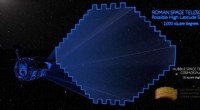
* Optical telescopes: These are the most familiar type, gathering visible light from celestial objects. They can be ground-based (e.g., the Very Large Telescope) or space-based (e.g., the Hubble Space Telescope).
* Radio telescopes: These detect radio waves, revealing information about cold, distant objects, interstellar gas, and the early universe. Examples include the Arecibo Observatory and the Atacama Large Millimeter/submillimeter Array (ALMA).
* Infrared telescopes: These detect infrared radiation, which can penetrate dust and gas clouds, allowing us to see objects obscured from optical telescopes. Examples include the Spitzer Space Telescope and the James Webb Space Telescope.
* Ultraviolet, X-ray, and gamma-ray telescopes: These instruments capture different forms of high-energy radiation, revealing information about energetic events like black holes, supernovae, and active galactic nuclei. Examples include the Chandra X-ray Observatory and the Fermi Gamma-ray Space Telescope.
Other Instruments:
* Spectrographs: These instruments break down light into its constituent colors, allowing astronomers to determine the composition, temperature, and motion of celestial objects.
* Interferometers: These instruments combine the signals from multiple telescopes, achieving higher resolution and sensitivity than individual telescopes.
* Particle detectors: These instruments are used to study cosmic rays, high-energy particles that bombard Earth from space.
* Spacecraft: Spacecraft are used to explore planets, moons, and other celestial bodies up close. They carry a variety of instruments, including cameras, spectrometers, and magnetometers.
* Ground-based observatories: These facilities often house multiple telescopes and instruments, providing scientists with a range of tools to study the universe.
Beyond these, scientists also rely on:
* Computer modeling and simulations: These tools are used to understand complex processes in the universe, such as the formation of galaxies and the evolution of stars.
* Data analysis techniques: Sophisticated algorithms are used to analyze the massive amounts of data collected by astronomical instruments.
The choice of instruments depends on the specific research question. By using a variety of instruments, scientists can gain a comprehensive understanding of the universe and its workings.