Here's how it works:
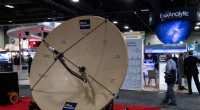
* Large antennas: Radio telescopes have large, dish-shaped antennas that collect radio waves from space. The larger the antenna, the more sensitive it is to faint signals.
* Signal amplification: The collected radio waves are then amplified using electronic receivers.
* Data processing: The amplified signals are converted into digital data and analyzed by computers.
The Cosmic Microwave Background Radiation (CMB)
One of the most significant sources of microwaves from space is the Cosmic Microwave Background Radiation (CMB). This faint glow of microwaves permeates the entire universe and is considered a relic of the Big Bang.
What the CMB tells us about the beginning of the universe:
* Evidence for the Big Bang: The existence of the CMB is a strong piece of evidence supporting the Big Bang theory.
* Age and size of the universe: The temperature and distribution of the CMB allow scientists to estimate the age of the universe (about 13.8 billion years) and its size.
* Early universe conditions: The CMB reveals information about the conditions of the early universe, including its temperature, density, and composition.
* Inflationary theory: The smoothness and uniformity of the CMB support the inflationary theory, which suggests that the universe underwent a rapid period of expansion shortly after the Big Bang.
* Structure formation: Small fluctuations in the CMB indicate the seeds from which galaxies and clusters of galaxies later formed.
Other sources of microwave radiation:
Besides the CMB, other sources of microwave radiation in space include:
* Supernova remnants: Exploding stars emit microwaves.
* Active galactic nuclei (AGN): Supermassive black holes at the centers of galaxies emit intense microwave radiation.
* Pulsars: Rapidly rotating neutron stars emit microwave radiation.
By studying microwave radiation from space, scientists continue to learn more about the origin, evolution, and structure of the universe.