1. Building upon Existing Knowledge:
* Kepler's Laws: Newton was familiar with Johannes Kepler's laws of planetary motion, derived from Tycho Brahe's detailed observations. These laws stated:
* Planets move in elliptical orbits with the Sun at one focus.
* A planet's speed varies, moving faster when closer to the Sun.
* The square of a planet's orbital period is proportional to the cube of its average distance from the Sun.
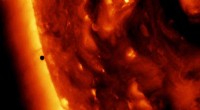
* Galileo's Observations: Galileo's observations with his telescope supported the heliocentric model (Sun-centered) and revealed phases of Venus, proving it orbits the Sun, not Earth.
2. Observing the Moon and Falling Objects:
* Universal Gravity: Newton observed the falling of objects on Earth, and theorized that this same force, gravity, extended beyond Earth, reaching to the Moon and holding it in orbit. He realized the Moon was constantly falling towards Earth, but due to its sideways motion, it never actually hits the surface.
* The Apple Myth: The famous "apple falling from a tree" story might be apocryphal, but it illustrates Newton's key insight: the same force acting on an apple on Earth also governs the motion of celestial bodies.
3. Mathematical Formulation:
* Laws of Motion: Newton formulated his three Laws of Motion:
* Inertia: An object at rest stays at rest, and an object in motion stays in motion at a constant speed and direction, unless acted upon by an unbalanced force.
* F = ma: The acceleration of an object is directly proportional to the force applied and inversely proportional to its mass.
* Action-Reaction: For every action, there is an equal and opposite reaction.
* Law of Universal Gravitation: Newton mathematically expressed the force of gravity: every particle in the universe attracts every other particle with a force proportional to the product of their masses and inversely proportional to the square of the distance between their centers.
4. Combining Observations and Math:
* Explaining Planetary Motion: By combining his Laws of Motion and Universal Gravitation, Newton could explain the observed elliptical orbits of planets. He showed how the Sun's gravity acts on planets, causing them to move in a curved path, rather than a straight line.
* Predictive Power: Newton's theory not only explained the observed motions of planets but also accurately predicted the motions of comets and other celestial objects.
In summary, Newton's understanding of planetary motion didn't come from just looking at the planets, but from a synthesis of observations, existing theories, and his own brilliant mathematical formulations. He realized that the same force that makes an apple fall to the ground is also responsible for the planets orbiting the Sun, fundamentally changing our understanding of the universe.