Here's a breakdown of the different types of scientific information gathered through observation:
1. Qualitative Observations:
* Descriptive: These observations describe qualities, characteristics, and appearances using words. Examples include: "The sky is blue," "The plant is green," "The rock is rough."
* Subjective: These observations involve personal interpretation and can vary between individuals. For instance, "The music is beautiful" is a subjective observation.
2. Quantitative Observations:
* Measurable: These observations involve measurements using instruments and are expressed using numbers. Examples include: "The temperature is 25 degrees Celsius," "The tree is 10 meters tall," "The object weighs 5 kilograms."
* Objective: These observations are based on facts and are independent of individual interpretation.
3. Observational Data:
* Recorded Observations: Observations are often documented using written descriptions, diagrams, photographs, videos, or data tables.
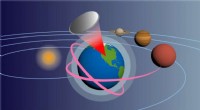
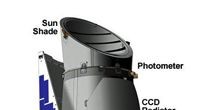
* Collected Data: Observations can also be collected using scientific instruments like thermometers, microscopes, telescopes, and sensors.
Importance of Empirical Evidence:
Empirical evidence is crucial in scientific research because it provides a foundation for:
* Forming hypotheses: Observations can inspire questions and lead to the development of testable hypotheses.
* Testing hypotheses: Experiments are designed to gather data that can either support or refute a hypothesis.
* Building theories: Over time, a body of consistent empirical evidence can contribute to the development of scientific theories.
Example:
Imagine you are observing a bird. You might observe its color, size, and behavior. This would be qualitative data. You could then use a measuring tape to determine its wingspan. This would be quantitative data. Your observations could lead you to hypothesize about the bird's diet or nesting habits, which you could then test through further observation or experimentation.
Overall, scientific information gathered through observation is essential for understanding the natural world and for advancing scientific knowledge.