* No nuclear fusion: Stars like our Sun generate light and heat through nuclear fusion, a process where hydrogen atoms fuse to form helium, releasing massive amounts of energy. The Earth doesn't have the necessary mass or internal conditions to sustain nuclear fusion.
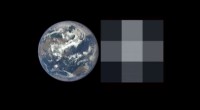
* Reflects sunlight: The Earth's surface, atmosphere, and clouds reflect sunlight, making it visible from space. This reflected light is what we see as the Earth's "shine."
* Internal heat: The Earth does have internal heat due to radioactive decay, but this heat is insufficient to produce visible light.
* Lack of a corona: The Sun has a corona, an extremely hot outer layer of plasma that emits light. The Earth lacks such a corona.
In essence, the Earth shines because it reflects the light of the Sun, not because it generates its own light. This makes it a non-luminous object.