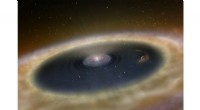
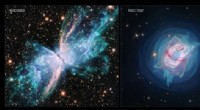
* What is a nebula? A nebula is a giant cloud of gas and dust in space. These clouds can be incredibly large, sometimes spanning hundreds of light-years.
* What's inside? The gas in a nebula is mostly hydrogen and helium, with small amounts of other elements.
* Gravity's role: Over time, gravity pulls the gas and dust in a nebula closer together. As the cloud collapses, the material heats up and compresses.
* Birth of a star: Eventually, the core of the collapsing cloud becomes so hot and dense that nuclear fusion begins. This is when hydrogen atoms fuse to form helium, releasing tremendous amounts of energy. This marks the birth of a star.
So, nebulas are like cosmic nurseries where new stars are born!
Here are some additional points to remember:
* Different types of nebulas: There are different types of nebulas, including emission, reflection, and dark nebulas. Each type has a different appearance and plays a different role in the star-formation process.
* Stars influence nebulas: The light and energy from stars can influence the gas and dust in nebulas, creating beautiful shapes and colors.
* Nebulas can be influenced by dying stars: Some nebulas form when a star dies, like a supernova, which can create shock waves that compress surrounding gas and dust, triggering new star formation.
In short, nebulas are essential for the creation of new stars. They are the building blocks of our universe, and their beauty and complexity continue to amaze astronomers and scientists.