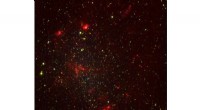
Stars: These are giant balls of hot gas that produce light and heat through nuclear fusion. Our sun is a star, and there are billions upon billions of others in our galaxy alone!
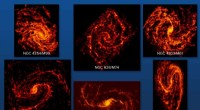
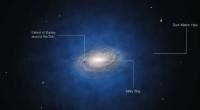
Galaxies: These are massive collections of stars, gas, dust, and dark matter. Our own galaxy, the Milky Way, is home to billions of stars, including our sun.
Nebulae: These are clouds of gas and dust in space, often illuminated by nearby stars. They can be the birthplace of new stars or the remnants of dying stars.
Black holes: These are regions of spacetime where gravity is so strong that nothing, not even light, can escape.
Quasars: These are extremely bright objects powered by supermassive black holes at the centers of galaxies.
Pulsars: These are rapidly rotating neutron stars that emit beams of radiation.
Asteroids: These are rocky bodies that orbit the sun, mostly found in the asteroid belt between Mars and Jupiter.
Comets: These are icy bodies that orbit the sun, leaving a trail of gas and dust behind them as they approach.
Moons: These are natural satellites that orbit planets. Our own moon is a familiar example, but there are many others orbiting planets throughout the solar system.
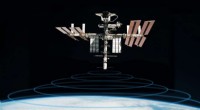
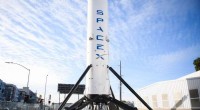
Spacecraft: These are human-made objects launched into space for various purposes, such as exploring other planets, observing the cosmos, and communicating with Earth.
This is just a small sample of what you can find in space. The universe is constantly being explored and discovered, and there's much more out there waiting to be found!