By Naked Eye:
* Brightness: Planets are generally brighter than stars, and their brightness doesn't twinkle.
* Position: Planets move across the sky relative to the stars. You can observe this shift over a few nights.
* Color: Some planets have distinct colors: Venus is often very bright and white, Mars is reddish, Jupiter is yellowish, and Saturn is a pale yellow.
Using a Telescope:
* Size and Appearance: Planets appear as disks through a telescope, while stars remain points of light.
* Phases: Venus, Mars, and Mercury exhibit phases like the Moon, due to their position relative to the Sun and Earth.
* Moons: Jupiter and Saturn have visible moons that orbit them.
Using Astronomy Tools:
* Star Charts and Apps: These tools help identify planets by showing their current position in the sky.
* Planetary Viewing Guides: These resources provide detailed information about each planet, including its location, visibility, and best viewing times.
Distinguishing Specific Planets:
* Mercury: Difficult to spot because it's close to the Sun, but it's fast-moving and changes position quickly.
* Venus: Very bright, often mistaken for a star. It can be seen in the evening or morning sky.
* Mars: Reddish in color, can appear brighter at times when it's closer to Earth.
* Jupiter: The largest planet, appears yellowish and has four bright moons easily visible through a telescope.
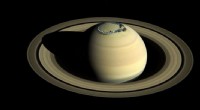
* Saturn: Known for its spectacular ring system, visible through a telescope. It appears yellowish.
* Uranus and Neptune: Very faint and difficult to see with the naked eye, requiring binoculars or a telescope.
Remember:
* Visibility: Planets are not always visible in the night sky, depending on their position relative to the Sun and Earth.
* Light Pollution: Light pollution can make it harder to see fainter planets.
* Patience: It takes time and practice to learn to identify planets.
By combining these techniques, you can start your journey to recognizing the wonders of our solar system!