1. Star's Life Cycle:
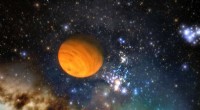
* Formation: Stars are born from massive clouds of gas and dust that collapse under their own gravity.
* Main Sequence: Stars spend most of their lives fusing hydrogen into helium in their core, generating energy and pressure that balances the inward pull of gravity. This phase is called the "main sequence."
* Red Giant/Supergiant: As the star runs out of hydrogen fuel, it starts fusing heavier elements like helium. This process causes the star to expand dramatically into a red giant or supergiant.
2. Stellar Death:
* Massive Stars: Stars much more massive than our Sun (at least 8 times its mass) eventually exhaust all their nuclear fuel. The core collapses catastrophically, creating a supernova explosion.
* Supernova Explosion: The supernova explosion blasts away the star's outer layers, leaving behind a dense, collapsed core.
* Black Hole Formation: If the core's mass is sufficiently large (around 3 times the mass of our Sun), the gravitational force is so intense that it overcomes all other forces, crushing the core into an infinitely dense point called a singularity. This singularity, along with the surrounding warped space-time, is what we call a black hole.
In short:
* It's not the star itself that becomes a black hole, but the *core* of a massive star after a supernova explosion.
* The key factor for black hole formation is the core's mass. If it's large enough, the gravity overcomes all other forces, leading to the formation of a singularity and a black hole.
Important Note: Not all massive stars become black holes. Some may form neutron stars, which are also incredibly dense but less massive than black holes.