Here's a breakdown:
* Visible Light: This makes up a small portion of the Sun's total energy output, roughly 44%. It's the part of the electromagnetic spectrum that our eyes can see, and it's what makes the Sun appear bright and yellow.
* Infrared Radiation: This accounts for a much larger portion of the Sun's energy, about 49%. We can't see it, but we feel its warmth as heat.
* Ultraviolet Radiation: This makes up about 7% of the Sun's total energy. While it's invisible to our eyes, it can cause sunburns and damage our skin.
Why the Sun emits visible light:
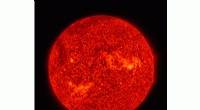
The Sun is a giant ball of hot gas, primarily hydrogen and helium, undergoing nuclear fusion. This process releases a tremendous amount of energy, which is emitted across the entire electromagnetic spectrum.
The peak of this radiation, the point at which the Sun emits the most energy, falls within the visible light spectrum. This is due to the Sun's extremely high temperature (around 5,500°C) and the physics of blackbody radiation.
In summary: While visible light is important for us to see the Sun, it represents only a portion of the Sun's energy output. The majority of its energy is released as infrared radiation, which we experience as heat.