Two main categories:
1. Inner Planets (Terrestrial Planets): These planets are rocky, dense, and relatively small. They are close to the Sun.
* Mercury: The smallest planet, closest to the Sun, and very hot.
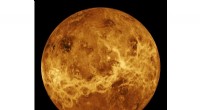
* Venus: The hottest planet, with a dense atmosphere of carbon dioxide.
* Earth: Our home, with liquid water, an active atmosphere, and life.
* Mars: The "Red Planet," known for its reddish hue due to iron oxide, with a thin atmosphere.
2. Outer Planets (Gas Giants): These planets are large, gaseous, and less dense. They are further from the Sun and much colder.
* Jupiter: The largest planet, with a swirling atmosphere of hydrogen and helium.
* Saturn: Known for its spectacular ring system, also composed primarily of hydrogen and helium.
* Uranus: An ice giant, tilted on its side, with a blue-green color.
* Neptune: Also an ice giant, with a very active atmosphere.
Dwarf Planets: These celestial bodies are similar to planets in that they orbit the Sun, but they haven't cleared their orbital path of other objects.
* Pluto: A dwarf planet, previously considered the ninth planet.
* Eris: A dwarf planet larger than Pluto, located in the Kuiper Belt.
* Ceres: The largest object in the asteroid belt.
Other Classifications:
* Composition: Some planets are categorized based on their composition, such as rocky planets, gas giants, and ice giants.
* Orbital characteristics: Planets can be classified based on their orbital period, eccentricity, and inclination.
* Presence of moons: Planets can be classified based on the number and characteristics of their moons.
This is a simplified way of classifying planets. There are many other factors that can be considered, such as geological activity, atmospheric composition, and magnetic field strength.