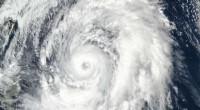
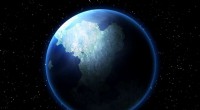
1. Atmosphere: Weather is the state of the atmosphere, which is a layer of gas surrounding a planet. Interplanetary space has a near-perfect vacuum, with a very low density of particles. There's simply not enough material for wind, clouds, rain, or other atmospheric phenomena to occur.
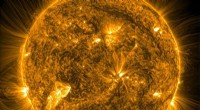
2. A Source of Energy: Weather is driven by the energy of a star, like our Sun. This energy heats the atmosphere, creating temperature differences and air currents. While the Sun provides plenty of energy in space, it doesn't create the localized heating and cooling patterns that drive weather.
3. Water Cycle: Weather on Earth is heavily influenced by the water cycle, including evaporation, condensation, and precipitation. There's virtually no water in interplanetary space, and even if there were, it wouldn't be able to cycle in the same way due to the lack of an atmosphere.
Instead of weather, interplanetary space has:
* Solar Wind: A constant stream of charged particles from the Sun. While not weather, it can affect spacecraft and even have a minor influence on planetary atmospheres.
* Cosmic Rays: High-energy particles from outside our solar system. These can pose a radiation hazard to astronauts.
* Dust and Gas Clouds: While much less dense than a planet's atmosphere, these can still have a minor influence on the space environment.
In short, interplanetary space is a very different environment than Earth's atmosphere, and lacks the key ingredients for weather as we understand it.