1. Giant Impact:
* This theory posits that early in the Solar System, a Mars-sized object collided with Mercury. The impact blasted away much of the planet's outer layers, leaving behind a disproportionately large core.
* Evidence: Mercury's unusually high density supports this theory.
2. Early Solar Nebula:
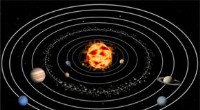
* This theory suggests that the solar nebula – the disk of gas and dust that formed the planets – was denser near the Sun. This denser environment could have led to the formation of a core that was relatively larger compared to the mantle and crust.
3. Core Growth:
* Some models suggest that Mercury's core may have continued to grow after its initial formation. The planet's intense magnetic field suggests a molten, dynamic core, possibly with ongoing growth.
4. Lack of Heavy Elements:
* Another possibility is that Mercury simply formed from a less diverse mix of materials, lacking the heavier elements that make up the mantle and crust of other terrestrial planets. This could explain its relatively small mantle and crust compared to its core.
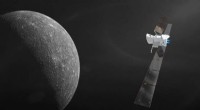
It's important to remember that none of these theories are definitively proven. Further studies and missions like NASA's MESSENGER mission, which provided valuable data about Mercury, are contributing to our understanding of this fascinating planet.
Here are some additional points about Mercury's core:
* Size: It occupies about 85% of the planet's radius, compared to about 55% for Earth.
* Composition: Primarily iron with a small amount of nickel and sulfur.
* Liquid Core: A large portion of the core is believed to be liquid, possibly with a solid inner core.
* Magnetic Field: Mercury's magnetic field is surprisingly strong, despite its small size. This suggests a dynamic, molten core.
Studying Mercury's core helps us understand the formation and evolution of the Solar System and the planets within it.