The Pre-Supernova Stage:
* Fusion in the Core: Stars like our Sun spend most of their lives fusing hydrogen into helium in their cores, releasing energy that pushes outward against gravity. This process keeps the star stable.
* Running Out of Fuel: Eventually, the hydrogen fuel in the core is depleted. The star starts to fuse heavier elements (like helium, carbon, and oxygen), but these fusion reactions release less energy and are less efficient.
* Core Collapse: As the star's core runs out of fuel, it starts to shrink and heat up. The core becomes extremely dense, and eventually, the outward pressure from fusion can no longer resist the inward pull of gravity.
* Iron Accumulation: Eventually, the core is mostly made of iron. Iron is the most stable element, meaning it can't be fused to create more energy. This marks the end of the line for the star's core.
The Supernova Event:
* Sudden Collapse: The core can no longer sustain itself against gravity and collapses inwards in a fraction of a second. This happens very quickly, at speeds approaching a quarter of the speed of light.
* Shock Wave: The collapse creates a shock wave that travels outwards through the star, blowing off the outer layers with incredible force.
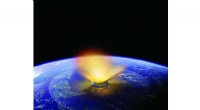
* Explosion: The shock wave heats the ejected material to millions of degrees, causing it to glow brightly for weeks, months, or even years. This is what we see as a supernova.
Types of Supernovae:
* Type Ia Supernovae: These occur in binary star systems where a white dwarf star accretes material from its companion star, eventually becoming unstable and exploding.
* Type II Supernovae: These occur when a massive star (at least 8 times the mass of our Sun) collapses under its own gravity.
Consequences of a Supernova:
* Heavy Element Formation: Supernovae are the primary source of many heavy elements in the universe, including gold, silver, and uranium.
* Energy Release: A supernova releases a tremendous amount of energy, equivalent to the energy output of an entire galaxy for a short period.
* New Stars: Supernovae can trigger the formation of new stars by compressing nearby gas clouds.
* Cosmic Rays: Supernovae are major sources of cosmic rays, high-energy particles that travel through space at nearly the speed of light.
In summary, a star becomes a supernova when its core runs out of fuel, collapses under its own gravity, and explodes, releasing a tremendous amount of energy and heavy elements into space.