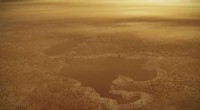
1. Size and Mass: Dwarf planets are significantly smaller and less massive than planets. They lack sufficient gravity to clear their orbital neighborhood of other celestial bodies.
2. Shape: While not a strict requirement, most dwarf planets are irregularly shaped, often resembling potatoes or other irregular forms. This is due to their relatively low mass and gravity, which makes them less likely to achieve a spherical shape.
3. Orbit: Dwarf planets often have eccentric and inclined orbits, meaning they are not perfectly circular and may be tilted relative to the plane of the solar system.
4. Composition: Like other celestial bodies, dwarf planets can vary in composition. Some, like Pluto, are primarily composed of rock and ice, while others, like Ceres, are more rocky.
5. Moons: Several dwarf planets have moons, though not all of them do. The number and size of moons can vary significantly.
6. Lack of Planetary Dominance: They do not have a dominant gravitational influence in their orbital region. They share their space with other objects of similar size, unlike planets which are the dominant gravitational bodies in their orbits.
7. Classification: They are classified as dwarf planets by the International Astronomical Union (IAU), which defined the criteria for planetary status in 2006.
Here's a quick summary:
* Smaller size and mass: Dwarf planets are significantly smaller than planets.
* Irregular shape: They often lack a perfectly spherical shape.
* Eccentric and inclined orbits: Their orbits are not perfectly circular and may be tilted.
* Varied composition: They can be made of rock, ice, or a combination of both.
* Moons: Some dwarf planets have moons.
* Sharing orbital space: They do not dominate their orbital regions gravitationally.
While Pluto is the most famous dwarf planet, others include Ceres, Eris, Makemake, and Haumea. These fascinating celestial bodies provide valuable insights into the formation and evolution of our solar system.