* Venus rotates extremely slowly and in the opposite direction. It takes Venus about 243 Earth days to complete one rotation, while its orbital period around the sun is 225 Earth days. This means a day on Venus is longer than its year!
* Venus's rotation is retrograde. This means it spins on its axis in the opposite direction to the way it orbits the sun.
* Venus's thick atmosphere creates a unique effect. Its dense, carbon dioxide atmosphere traps heat, creating an extreme greenhouse effect. This atmosphere scatters sunlight, making the sky appear a hazy yellow-orange.
So, what does sunrise and sunset look like on Venus?
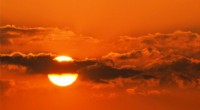
Imagine a slow, hazy sunrise that takes weeks to occur. The sun would slowly rise in the west and set in the east (the opposite of Earth). The sun would never appear to rise very high in the sky. The thick atmosphere would make the sun appear as a dim, blurry disk.
In summary:
* Venus's rotation is extremely slow and retrograde.
* Its thick atmosphere scatters sunlight, creating a unique sky and a slow, hazy sunrise and sunset.
While Venus's sunrise and sunset are fascinatingly different from Earth's, it's important to remember that this information is based on theoretical models and observations, as we have never directly witnessed a sunrise or sunset on Venus.