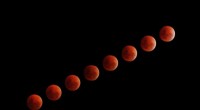
1. Earth's Orbit: The Earth revolves around the Sun. As we move in our orbit, our perspective on the planets changes. This is similar to how objects in your car appear to move past you as you drive down the road.
2. Planets' Orbits: Planets also orbit the Sun, but at different speeds and distances. The faster and closer a planet is to the Sun, the quicker it appears to move against the background stars.
3. Retrograde Motion: A fascinating phenomenon called "retrograde motion" occurs when a planet appears to briefly move backwards in its path across the sky. This is an illusion caused by Earth's faster orbital speed. As Earth "overtakes" a slower outer planet, the planet seems to temporarily reverse its direction.
4. Earth's Rotation: The Earth's rotation on its axis also contributes to the apparent movement of planets across the sky. They rise in the east and set in the west, just like the Sun and Moon.
5. Perspective: The planets' position in the sky is also influenced by our location on Earth. If you travel to a different location, you will see the planets from a slightly different angle, making them appear in different positions.
In summary, the apparent change in the location of planets in the sky is due to a combination of Earth's motion, the planets' own motion, and our perspective on Earth.