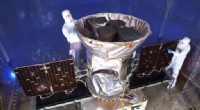
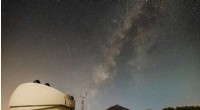
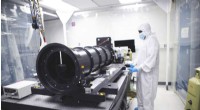
1. Telescopes: These are the most obvious and fundamental tools. Telescopes allow astronomers to observe distant galaxies and gather information about their:
* Redshift: The light from these galaxies is shifted towards the red end of the spectrum, indicating that they are moving away from us. This is known as redshift and is a key piece of evidence for the expansion of the universe.
* Cosmic Microwave Background Radiation (CMB): This faint afterglow of the Big Bang is a uniform radiation permeating the entire universe. The CMB provides evidence for the early, hot and dense state of the universe.
2. Spectrometers: These instruments analyze the light from celestial objects, breaking it down into its constituent wavelengths. By examining the spectral lines in this light, astronomers can determine:
* Composition: The elements and molecules present in stars, galaxies, and other objects.
* Temperatures and Velocities: Spectrometers can reveal the temperature and movement of objects based on the Doppler shift and other spectral characteristics.
These are just two examples, and astronomers use a variety of other tools and techniques to study the universe and gather evidence for the Big Bang Theory.