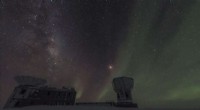
Here's why:
* Earth's Tilt: The Earth is tilted on its axis, causing different parts of the planet to face the Sun at different times of the year. This tilt also means that different parts of the sky are visible from different latitudes.
* Celestial Poles: The Earth's axis points towards the north and south celestial poles. The North Star (Polaris) is very close to the north celestial pole, making it visible all year round from the Northern Hemisphere. Constellations near the south celestial pole are only visible from the Southern Hemisphere.
Some examples of constellations you won't see from 40 degrees North:
* Crux (Southern Cross): This iconic constellation is the most recognizable in the southern hemisphere.
* Centaurus: A large constellation containing the star Alpha Centauri, the closest star system to our Sun.
* Carina: Home to the spectacular Eta Carinae nebula, a region of active star formation.
* Pavo: Known for its bright star Peacock, which is a red giant.
* Tucana: This constellation is home to the Small Magellanic Cloud, a dwarf galaxy visible to the naked eye.
Note: You might catch a glimpse of some of these constellations near the horizon at very specific times of the year, but they will never be fully visible in the sky from 40 degrees North.