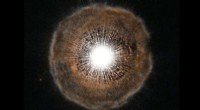
* They are giant balls of hot gas. Both the sun and stars are primarily composed of hydrogen and helium, which undergo nuclear fusion in their cores, generating immense amounts of energy.
* They emit light and heat. The energy released through nuclear fusion is what makes them shine brightly and radiate heat into space.
* They have their own gravitational field. This gravity holds the massive amounts of gas together, preventing them from dispersing.
* They follow the same life cycle. Stars, including our sun, are born in nebulae, evolve through various stages, and eventually reach the end of their lives, potentially exploding as supernovae or collapsing into white dwarfs, neutron stars, or black holes.
* They follow the same physical laws. The same laws of physics govern the behavior of stars and our sun, including gravity, nuclear fusion, and electromagnetic radiation.
The key difference is simply scale. The sun is just one star in a vast universe containing countless others. Some stars are much larger and brighter than our sun, while others are smaller and dimmer. But fundamentally, they share the same basic characteristics and processes.