Disk Stars
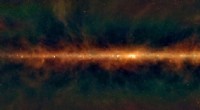
* Location: Found in the flat, rotating disk of the Milky Way galaxy, which includes the spiral arms.
* Age: Generally younger than halo stars, with a wide range of ages.
* Composition: Richer in heavier elements (metals) than halo stars. This is because they formed after the initial burst of star formation in the early universe, when heavier elements were more abundant.
* Motion: Orbit the galactic center in a relatively flat plane and at relatively high speeds.
* Types: Include a diverse range of stars, from hot, blue stars to cool, red dwarfs, and everything in between.
* Examples: Our Sun is a disk star. Many of the stars we see in the night sky belong to the disk population.
Halo Stars
* Location: Found in a spherical region surrounding the Milky Way's disk.
* Age: Generally very old, formed in the early universe.
* Composition: Poor in heavier elements (metals), as they formed before significant amounts of heavy elements were created by supernovae.
* Motion: Orbit the galactic center in random directions, with a wide range of speeds.
* Types: Primarily composed of old, low-mass stars, often red dwarfs.
* Examples: Globular clusters, which are spherical collections of stars, are primarily composed of halo stars.
Key Differences in Summary
| Feature | Disk Stars | Halo Stars |
|-------------|-------------------|--------------------|
| Location | Galactic Disk | Galactic Halo |
| Age | Younger | Very Old |
| Composition | Richer in Metals | Poor in Metals |
| Motion | Flat, Ordered | Random, Irregular |
| Types | Diverse | Mostly Old, Low-Mass |
Origin and Evolution:
* Disk stars formed later in the Milky Way's history, after the galaxy had settled into a disk shape. They were formed from gas and dust enriched with heavy elements produced by earlier generations of stars in the halo.
* Halo stars are the oldest stars in the galaxy, formed shortly after the Big Bang. They formed in a chaotic environment before the galaxy settled into its current disk-like structure.
Understanding the Difference:
The difference between disk and halo stars tells us about the history of our galaxy and how it evolved. By studying these two distinct populations of stars, we gain insights into the formation and evolution of galaxies and the universe as a whole.