Ancient Greece (Pre-Copernican Era):
* ~3rd Century BC: Aristarchus of Samos proposed a heliocentric model, but it lacked observational evidence and was overshadowed by the more established geocentric model of Aristotle and Ptolemy.
* ~2nd Century AD: Ptolemy published his influential book, the "Almagest", which presented a geocentric model that accurately predicted planetary movements. This model became the standard for over 1400 years.
The Renaissance and Early Modern Period:
* 1543: Nicolaus Copernicus published "De Revolutionibus Orbium Coelestium" (On the Revolutions of the Heavenly Spheres), proposing a heliocentric model with the Sun at the center and the Earth revolving around it. This challenged the established Ptolemaic system but lacked strong observational support.
* 1609: Galileo Galilei made groundbreaking observations using his telescope, supporting the heliocentric model. He observed the phases of Venus, the moons of Jupiter, and the Sunspots, all of which contradicted the geocentric model.
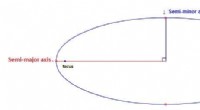
* 1609-1619: Johannes Kepler formulated his three laws of planetary motion, based on the observations of Tycho Brahe. These laws described elliptical orbits of planets around the Sun, providing a more accurate and mathematically sound description of planetary movement than Ptolemy's system.
* 1687: Isaac Newton published "Philosophiæ Naturalis Principia Mathematica", which explained the force of gravity, unifying the celestial and terrestrial realms under one framework. Newton's theory provided a scientific basis for the heliocentric model.
Further Developments and Confirmation:
* 18th-19th Centuries: Continued advancements in astronomical observation and theoretical physics solidified the heliocentric model.
* 20th Century: Einstein's theory of general relativity provided a more sophisticated understanding of gravity and its impact on the universe.
Key Points:
* The transition from geocentric to heliocentric was a long, gradual process, not a sudden event.
* It involved the work of numerous individuals, from ancient Greek philosophers to modern scientists.
* The change was driven by a combination of theoretical arguments, observational evidence, and mathematical models.
The shift from geocentric to heliocentric was not just about changing a cosmological model; it represented a fundamental change in our understanding of the universe and our place within it. It paved the way for modern astronomy and our current understanding of the cosmos.