1. Newton's First Law of Motion (Law of Inertia)
* Statement: An object at rest stays at rest, and an object in motion stays in motion with the same speed and in the same direction *unless acted upon by an unbalanced force*.
* Application to Planets: If there was no force acting on a planet, it would indeed continue moving in a straight line at a constant speed. Imagine throwing a ball – if there was no gravity, the ball would just keep going in the direction you threw it.
2. Gravity's Role
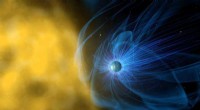
* The Key Force: Gravity is the unbalanced force that acts on planets, preventing them from flying off into space. It's a force of attraction between any two objects with mass. The Sun's immense mass exerts a strong gravitational pull on the planets.
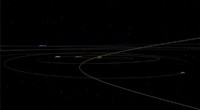
* Curving the Path: This gravitational force continuously pulls the planets towards the Sun, constantly changing the planet's direction. Instead of a straight line, the planet's path becomes a curved orbit.
3. Balance of Inertia and Gravity
* Centripetal Force: The inward pull of gravity is called the centripetal force. This force is what keeps the planets in orbit, constantly pulling them toward the Sun.
* Tangential Velocity: Planets are also moving at a high velocity (tangential velocity) in their orbits. This velocity is the "straight line" component of their motion, which inertia wants to maintain.
In Summary
The planets would fly off in straight lines if not for the force of gravity from the Sun. Gravity constantly pulls them inward, creating a balance between inertia and gravity, resulting in their curved orbital paths.