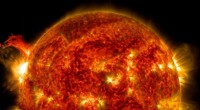
* Nuclear Fusion: The sun's immense gravity forces hydrogen atoms to fuse together, creating helium and releasing a tremendous amount of energy in the form of light and heat. This is what makes the sun shine and provides energy to Earth. Neither planets nor moons have the mass or internal conditions needed for nuclear fusion.
* Emitting Light: The sun is the primary source of light in our solar system. While other celestial bodies can reflect sunlight, they don't produce their own.
* Creating Solar Wind: The sun constantly emits a stream of charged particles called solar wind, which travels throughout the solar system. This can have significant effects on Earth's atmosphere and magnetic field.
* Controlling the Solar System: The sun's gravity is the dominant force in our solar system. It keeps the planets and other objects orbiting it in a stable manner.
While other celestial bodies have their own unique features, the sun's ability to generate its own light and heat through nuclear fusion makes it fundamentally different from all other objects in our solar system.