Physical Characteristics:
* Size: Diameter of 140,000 km (87,000 miles), 11 times wider than Earth.
* Mass: 318 times more massive than Earth, making it the most massive planet in our solar system.
* Composition: Mostly hydrogen and helium with traces of other elements like methane, ammonia, and water.
* Atmosphere: Thick and turbulent, with swirling clouds of ammonia, water, and other compounds.
* Great Red Spot: A massive storm that has been raging for centuries, larger than Earth in size.
Orbit and Rotation:
* Orbital period: 11.86 Earth years to orbit the Sun.
* Rotation period: 9.9 hours, the fastest rotation of any planet in our solar system.
Moons:
* Jupiter has at least 79 moons, the most of any planet in our solar system.
* The four largest moons (Io, Europa, Ganymede, and Callisto) are called the Galilean moons, named after Galileo Galilei who discovered them in 1610.
Other Notable Features:
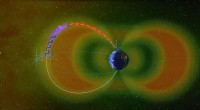
* Magnetic field: Jupiter has a powerful magnetic field, the strongest in our solar system, trapping charged particles from the Sun.
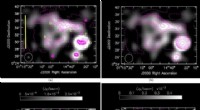
* Auroras: Jupiter has stunning auroras, similar to the Northern Lights on Earth, caused by the interaction of charged particles with its magnetic field.
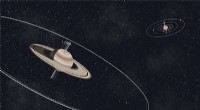
* Rings: Jupiter has a faint ring system, much less prominent than Saturn's.
Exploration:
* Many spacecraft have visited Jupiter, including the Pioneer, Voyager, Galileo, and Juno missions.
* These missions have provided us with invaluable information about the planet and its moons.
Importance:
* Jupiter's gravitational influence is thought to have played a significant role in shaping the early solar system.
* The planet's moons are of great interest to scientists because they may harbor conditions suitable for life.
Jupiter is a fascinating and complex world, and it continues to hold many mysteries for scientists to explore.