1. Radio Waves:
* Why important:
* Study cold objects: Radio waves are emitted by cool objects, like interstellar gas clouds, galaxies, and distant objects in the early universe.
* Penetrate dust and gas: Radio waves can pass through dense clouds of gas and dust that obscure visible light, allowing us to see what lies behind them.
* Study magnetic fields: Radio waves are emitted by charged particles spiraling around magnetic fields, allowing us to map these fields in various celestial objects.
2. Infrared Radiation:
* Why important:
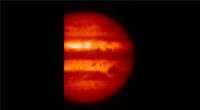
* Study cool objects: Infrared radiation is emitted by objects that are warm but not hot enough to emit visible light, like planets and young stars.
* See through dust: Infrared radiation can penetrate dust clouds more easily than visible light, revealing objects that are hidden.
* Study star formation: Infrared telescopes can observe the formation of stars and planets within dusty clouds.
3. Ultraviolet Radiation:
* Why important:
* Study hot objects: Ultraviolet radiation is emitted by hot objects, like hot stars and active galaxies.
* Study stellar atmospheres: Ultraviolet radiation can be used to study the composition and temperature of stellar atmospheres.
* Study the interstellar medium: Ultraviolet radiation can be used to study the composition and structure of the interstellar medium, the space between stars.
4. X-rays:
* Why important:
* Study extremely hot objects: X-rays are emitted by extremely hot objects, like black holes, neutron stars, and supernova remnants.
* Study galactic centers: X-rays can be used to study the active galactic nuclei (AGNs) at the centers of galaxies.
* Study the Sun: X-ray telescopes are used to study solar flares and other energetic events on the Sun.
5. Gamma Rays:
* Why important:
* Study the most energetic objects: Gamma rays are the most energetic form of electromagnetic radiation and are emitted by the most powerful objects in the universe, like supernova explosions, active galactic nuclei, and pulsars.
* Study the early universe: Gamma rays can be used to study the very early universe, just after the Big Bang.
By studying the universe at all wavelengths of the electromagnetic spectrum, astronomers can get a much more complete picture of the cosmos.