Comets:
* What they are: Comets are icy bodies, essentially "dirty snowballs" made of ice, dust, and rock. They orbit the Sun in highly elliptical paths.
* Where they come from: Most comets reside in the Kuiper Belt (beyond Neptune) or the Oort Cloud (even further out).
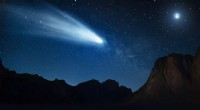
* Appearance: When a comet gets close to the Sun, the heat causes the ice to vaporize, creating a bright, glowing head (coma) and often a long tail of gas and dust.
* Examples: Halley's Comet, Hale-Bopp Comet.
Meteors:
* What they are: Meteors are small pieces of debris (like dust or rock) that enter the Earth's atmosphere at high speeds.
* Where they come from: Meteors originate from comets, asteroids, or other celestial bodies.
* Appearance: The friction from entering the atmosphere causes them to burn up, creating a streak of light we call a "shooting star".
* Examples: The Perseid meteor shower, the Leonid meteor shower.
Key Differences:
* Size: Comets are much larger than meteors.
* Composition: Comets are mainly ice and dust, while meteors are primarily rock and metal.
* Location: Comets orbit the Sun, while meteors are transient objects that enter the Earth's atmosphere.
* Appearance: Comets have tails, while meteors are streaks of light.
Important note: A meteoroid is the term used for the object *before* it enters the Earth's atmosphere. After it burns up, the leftover piece that hits the ground is called a meteorite.