Astronomy has always been driven by technological advancements, pushing the boundaries of our understanding of the cosmos. Here are some notable examples:
1. Telescopes:
* Optical Telescopes: From Galileo's rudimentary instruments to the massive telescopes like the Very Large Telescope (VLT) and the James Webb Space Telescope (JWST), optical telescopes have dramatically increased our view of the universe.
* Radio Telescopes: These telescopes detect radio waves, offering insights into cosmic phenomena like pulsars, black holes, and the early universe. The Atacama Large Millimeter/submillimeter Array (ALMA) is a prime example.
* Space Telescopes: Orbiting above Earth's atmosphere, telescopes like Hubble and JWST provide clearer images and access to wavelengths not visible from Earth.
2. Spacecraft and Missions:
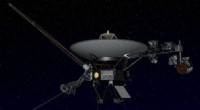
* Voyager Missions: These probes have explored the outer solar system, sending back invaluable data about Jupiter, Saturn, Uranus, and Neptune.
* Mars Missions: The rovers Curiosity and Perseverance have provided unprecedented insights into the Martian landscape and its potential for past life.
* Lunar Missions: The Apollo program brought back the first samples of the Moon, while more recent missions like Artemis aim to establish a permanent lunar base.
3. Data Processing and Analysis:
* Supercomputers: Analyzing the vast amount of data collected by modern telescopes and spacecraft requires immense computational power. Supercomputers play a crucial role in processing and interpreting these data sets.
* Machine Learning: Algorithms are being used to analyze images, identify patterns, and make predictions based on astronomical data. This is particularly useful for discovering new celestial objects and understanding complex phenomena.
* Data Visualization: Powerful visualization tools allow scientists to explore and communicate their findings in more intuitive ways, making complex astronomical data accessible to a wider audience.
4. Other Innovations:
* Adaptive Optics: This technology compensates for the blurring effects of Earth's atmosphere, enabling sharper images from ground-based telescopes.
* Interferometry: Combining signals from multiple telescopes creates a virtual telescope with significantly higher resolution, allowing for detailed studies of distant objects.
* Gravitational Wave Detectors: Detectors like LIGO and Virgo have opened a new window on the universe by detecting gravitational waves, ripples in spacetime generated by massive cosmic events.
Looking Forward:
The future of astronomy is bright, with continued advancements in technology promising even more groundbreaking discoveries. Future projects include:
* Next-Generation Telescopes: Larger and more powerful telescopes like the Extremely Large Telescope (ELT) and the Giant Magellan Telescope (GMT) are under construction, promising unprecedented views of the universe.
* Space-Based Observatories: Missions like the Nancy Grace Roman Space Telescope and the Square Kilometer Array (SKA) will explore the universe in new ways, studying dark energy, exoplanets, and the early universe.
* Advanced Data Analysis: Continued development of artificial intelligence and machine learning will revolutionize how we analyze astronomical data, enabling new discoveries and insights.
These technological advancements are not just advancing our understanding of the cosmos, but also inspiring future generations to explore the wonders of the universe.