1. Direct Observation:
* Spacecraft: Spacecraft like the Stardust mission have flown through the solar system and collected dust particles, providing direct evidence of their existence.
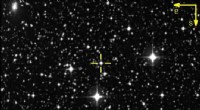
* Telescopes: Ground-based and space telescopes like the Hubble Space Telescope can observe the reflection of sunlight off dust clouds, revealing their presence and distribution.
2. Indirect Observation:
* Zodiacal Light: A faint, pyramid-shaped glow seen near the horizon before sunrise and after sunset is caused by sunlight scattering off dust particles in the inner solar system.
* Meteor Showers: These occur when Earth passes through a stream of debris left behind by a comet or asteroid. The small particles, called meteoroids, burn up in the atmosphere, creating the streaks of light we see.
* Interplanetary Dust Particles (IDPs): These tiny particles, collected from the Earth's atmosphere and from the ocean floor, are remnants of meteoroids that have survived their journey through the atmosphere.
* Light Scattering: By analyzing the polarization of sunlight scattered by dust particles, scientists can infer their size and composition.
3. Studying Asteroids and Comets:
* Cometary Tails: The dust tails of comets are made up of tiny particles released from the comet's nucleus as it heats up near the Sun.
* Asteroid Collisions: The collisions of asteroids can create debris that becomes meteoroids and dust.
4. Studying Light from Distant Objects:
* Interstellar Dust: By studying the light from distant stars and galaxies, astronomers can observe how this light is affected by the presence of dust in the interstellar medium. This tells us about the distribution and composition of this dust.
These methods provide a wealth of evidence confirming the existence of small meteoroids and dust in space. They also help us learn about their composition, distribution, and role in the formation and evolution of the solar system.