Mercury is the smallest and innermost planet in our solar system, orbiting the sun at a blistering speed. Here are some key facts about this intriguing world:
Key Features:
* Size: About 38% the size of Earth, making it slightly larger than our Moon.
* Composition: Primarily composed of iron and nickel, giving it a dense, metallic core.
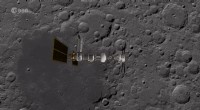
* Surface: Marked by craters, plains, and cliffs, indicating a violent past with heavy asteroid bombardment.
* Atmosphere: Extremely thin, nearly nonexistent, and composed primarily of sodium, potassium, and helium.
* Temperature: Experiences extreme temperature swings, ranging from a scorching 430°C (800°F) during the day to a frigid -180°C (-290°F) at night.
* Rotation: Slow and unusual, taking 59 Earth days to complete a single rotation while orbiting the sun in just 88 Earth days.
Interesting Facts:
* Mercury's surface is heavily cratered, indicating a long history of asteroid impacts.
* It has a magnetic field, though it's much weaker than Earth's.
* Due to its proximity to the Sun, Mercury is incredibly difficult to observe from Earth.
* There's evidence suggesting volcanic activity in Mercury's past.
* The planet has no known moons.
Exploration:
* Only two spacecraft have visited Mercury: Mariner 10 in the 1970s and MESSENGER, which orbited the planet from 2011 to 2015.
* MESSENGER provided invaluable data about the planet's surface, composition, and magnetic field.
Future Exploration:
* The BepiColombo mission, a joint project by the European Space Agency and the Japan Aerospace Exploration Agency, is currently en route to Mercury and is expected to arrive in 2025.
* BepiColombo will study Mercury's magnetic field, internal structure, and geological history in greater detail.
Mercury, despite its challenging environment, is a fascinating world with secrets waiting to be unlocked. Through continued exploration, we can learn more about this swift and scorching neighbor.