* Dark matter does have mass: The most important thing to understand about dark matter is that it does have mass. It's called "dark" because it doesn't interact with light in the way that normal matter does, making it invisible to telescopes.
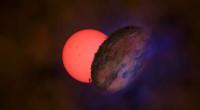
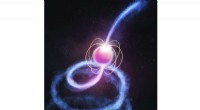
* Dim stellar remnants have mass: Stellar remnants like white dwarfs, neutron stars, and black holes are very dense and have significant mass. While they may be faint, they still contribute to the overall mass of the universe.
* Dark matter isn't just dim stellar remnants: The vast majority of dark matter is believed to be something completely different, with a different composition and properties than normal matter.
Evidence for Dark Matter:
The existence of dark matter is supported by multiple lines of evidence:
* Rotation curves of galaxies: Galaxies rotate much faster than they should based on the visible matter alone. This suggests there is additional mass that we can't see.
* Gravitational lensing: The bending of light around massive objects (like galaxies) is stronger than expected, implying the presence of unseen mass.
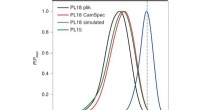
* Cosmic Microwave Background (CMB): The patterns in the CMB radiation suggest that the universe is made up of roughly 85% dark matter and 15% normal matter.
The Mystery of Dark Matter:
Scientists are still trying to understand what dark matter is made of. Some theories suggest it could be:
* Weakly Interacting Massive Particles (WIMPs): Hypothetical particles that interact very weakly with normal matter.
* Axions: Hypothetical particles that are much lighter than WIMPs.
* Sterile neutrinos: A type of neutrino that does not interact with the weak force.
It's crucial to avoid spreading misinformation about dark matter. It's a fascinating and important topic that requires careful study and understanding.