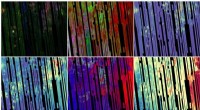
Here's how it works:
* Light source: A bright light source, often an LED or halogen lamp, is used.
* Mirror or reflector: The light from the source is directed towards a mirror or reflector.
* Objective lens: The mirror reflects the light beam towards the objective lens, which focuses the light onto the specimen.
* Specimen: The light then reflects off the surface of the specimen, carrying information about its structure and features.
* Objective lens: The reflected light passes back through the objective lens and into the eyepiece.
* Eyepiece: The eyepiece magnifies the image of the specimen for viewing.
This type of illumination is commonly used in stereomicroscopes and metallurgical microscopes to examine opaque samples, like metals, rocks, or insects.
Other types of microscope illumination:
* Transmitted light: Light shines through the specimen, which is usually thin and transparent. This is common in compound microscopes for viewing biological samples.
* Darkfield illumination: Only light scattered by the specimen reaches the objective lens, creating a bright image against a dark background.
* Phase contrast illumination: This technique uses special lenses to enhance contrast in transparent samples, making them visible.
* Fluorescence illumination: A specific wavelength of light is used to excite fluorescent molecules within the specimen, causing them to emit light. This is used in fluorescence microscopes to study biological processes and structures.