1. The Beginning: The Nebula
* Composition: Nebulae are giant clouds of gas and dust, primarily hydrogen and helium, with trace amounts of heavier elements. These clouds are incredibly cold and diffuse.
* Triggering the Collapse: Something has to initiate the process of collapse. This could be a nearby supernova explosion, a gravitational interaction with another cloud, or simply the natural density fluctuations within the nebula itself.
2. Gravity Takes Over
* Accretion: Once triggered, gravity starts to pull the particles in the nebula towards its center. As more material gets drawn in, the core becomes denser and hotter.
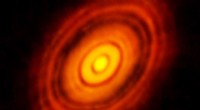
* Rotation: Due to conservation of angular momentum, the collapsing nebula begins to spin faster and faster. This creates a swirling disk of gas and dust around the central core.
3. Protostar Formation
* Core Ignition: The central core continues to heat up and compress, eventually reaching a temperature where nuclear fusion begins. This marks the birth of a protostar – a baby star.
* Outward Pressure: The heat and light generated by fusion create outward pressure, pushing back against gravity. This pressure stabilizes the protostar, preventing it from collapsing further.
4. The Protoplanetary Disk
* Planetesimal Formation: The rotating disk of gas and dust continues to cool. Within the disk, tiny particles clump together through collisions, forming larger objects called planetesimals.
* Planetary Accretion: These planetesimals continue to collide and merge, growing larger and larger over time. This process eventually forms planets, moons, and other objects in the system.
5. The Solar System Takes Shape
* Clearing the Disk: As the star matures, the remaining gas and dust in the protoplanetary disk is either blown away by stellar winds or absorbed by the growing planets.
* Final Stages: The planets settle into relatively stable orbits around the star, and the young solar system enters a period of relative calm.
Key Points:
* Time Scale: The entire process of nebula collapse to solar system formation can take millions of years.
* Variations: Not all nebulae form solar systems. Some may be too small or have the wrong composition.
* Our Solar System's Origins: The Sun and the planets of our solar system formed from a massive nebula called the "Solar Nebula" billions of years ago.
Interesting Fact: The Sun accounts for over 99.8% of the total mass of our solar system! This highlights the immense power of gravity in the formation process.