Here's a simplified breakdown of the process:
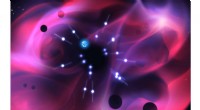
1. The Nebula: This cloud was primarily composed of hydrogen and helium, with traces of heavier elements.
2. Gravitational Collapse: Over millions of years, the cloud began to collapse under its own gravity.
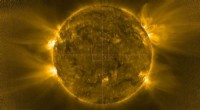
3. Formation of the Sun: The center of the collapsing cloud became incredibly hot and dense, eventually igniting nuclear fusion and forming the Sun.
4. Planetary Formation: The remaining material in the nebula swirled around the Sun, forming a disk. Within this disk, particles clumped together, growing larger and larger through a process called accretion.
5. Differentiation: Over time, the larger bodies heated up, allowing heavier elements to sink to the core while lighter elements rose to the surface. This process led to the formation of distinct layers within planets, moons, and other objects.
This process of formation is called the nebular hypothesis and is widely accepted by scientists.