Here's a breakdown of the main points:
1. The Giant Molecular Cloud: It all began with a massive, cold, and slowly rotating cloud of gas and dust, mostly hydrogen and helium, known as a Giant Molecular Cloud (GMC).
2. Gravitational Collapse: Something, like a nearby supernova explosion, triggered a gravitational collapse within the GMC. This caused the cloud to shrink and spin faster, much like a figure skater pulls in their arms.
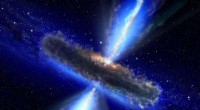
3. Formation of the Protoplanetary Disk: As the cloud contracted, it flattened into a spinning disk of gas and dust called a protoplanetary disk. The center of this disk, where most of the mass was concentrated, became extremely hot and dense.
4. Protostar Formation: This hot and dense core eventually ignited nuclear fusion, becoming our Sun, a protostar.
5. Accretion: In the disk, tiny particles of dust and ice began to stick together through electrostatic forces and collisions. These clumps grew over time, accreting more material and eventually forming planetesimals.
6. Planetesimal Growth: Planetesimals continued to collide and merge, forming larger bodies called protoplanets.
7. Formation of Planets: Through further accretion, collisions, and gravitational interactions, protoplanets eventually evolved into the planets we know today.
8. Clearing the Disk: The Sun's solar wind and gravitational influence cleared the remaining gas and dust from the protoplanetary disk, leaving behind the planets, moons, asteroids, and comets we see today.
Key Features of the Solar Nebula Theory:
* Conservation of Angular Momentum: The spinning cloud explains the orbital motion of planets.
* Disk Formation: The flat disk explains the distribution of planets within a plane.
* Planetesimal Accretion: The gradual growth of planets from small particles is consistent with the observed structure of planets.
* Solar Wind: The sun's activity explains the clearing of the disk.
Evidence supporting the Solar Nebula Theory:
* Observed Protoplanetary Disks: Astronomers have observed disks around other stars, providing evidence for the process.
* Composition of Planets: The composition of planets (rocky inner planets and gaseous outer planets) aligns with the theory.
* Meteorites: The composition of meteorites provides clues about the early solar system.
The Solar Nebula Theory is the most comprehensive and widely accepted model for the formation of our solar system. It provides a framework for understanding the processes and events that shaped the planets and other objects in our celestial neighborhood.