Here's why:
* Gravity: While a larger mass means a stronger gravitational pull, this alone doesn't determine the number of moons. The gravitational pull of a planet needs to be strong enough to *capture* a moon, but also needs to be balanced to *retain* the moon in a stable orbit.
* Orbital Dynamics: The stability of a moon's orbit depends on many factors beyond just the planet's mass. These include:
* The moon's own mass and speed
* The presence of other moons in the system
* The gravitational influence of other planets or celestial bodies
* Formation Processes: Moons can form in several ways:
* Capture: A planet's gravity can capture a passing asteroid or comet.
* Co-formation: Moons can form alongside their planet from the same disk of gas and dust.
* Collision: A large impact can eject material from a planet, which can then coalesce to form a moon.
Examples:
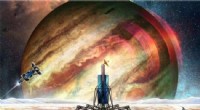
* Jupiter: The most massive planet in our solar system has 79 moons. This is partially due to its strong gravitational pull, but also because of its large size and its position in the early solar system, where it had access to more material.
* Earth: Despite being relatively small, Earth has one large moon. This moon likely formed from a giant impact early in Earth's history.
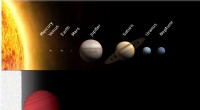
* Mercury and Venus: These planets are relatively small and have no moons.
In conclusion, while a planet's mass plays a role in its ability to attract and retain moons, other factors like orbital dynamics and formation processes are equally important.