Factors influencing moon formation and characteristics:
* Planet's Gravitational Pull: A more massive planet will have a stronger gravitational pull, which can:
* Capture more moons: Larger planets have a wider gravitational reach, making it easier to capture smaller objects, such as asteroids or comets, into orbit as moons.
* Influence moon formation: The planet's gravity can influence the formation of moons from the protoplanetary disk around a young star.
* Planet's Formation History: The composition and formation history of a planet can affect its ability to hold onto moons:
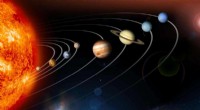
* Giant Planets: Gas giants, like Jupiter and Saturn, tend to have more and larger moons than terrestrial planets, as they formed from larger amounts of material.
* Terrestrial Planets: Rocky planets, like Earth and Mars, generally have fewer and smaller moons, as they were formed from smaller amounts of material.
* Planet's Orbit: The planet's distance from its star and the shape of its orbit can influence the stability of moons, especially smaller ones.
* Tidal Forces: The planet's gravity can exert strong tidal forces on its moons, leading to:
* Tidal Locking: Moons can become tidally locked, always showing the same face to the planet, as seen with our Moon.
* Tidal Heating: Friction caused by tidal forces can generate heat within the moon, potentially driving geological activity.
General Trend (with caveats):
While there's no direct proportional relationship, a general trend emerges:
* Larger planets tend to have more moons: This is due to their stronger gravitational pull and likely larger accretion disk during formation.
* Larger planets tend to have more massive moons: The larger gravitational pull of a massive planet can support larger moons, and the gravitational influence during formation can encourage the accretion of more material into moons.
Important Considerations:
* Exceptions exist: Some planets with smaller masses, like Mars, can still possess moons, while some massive planets, like Neptune, have a relatively small number of moons.
* Other factors: The composition and history of the planet and its surrounding environment play a significant role in the formation and characteristics of its moons.
In conclusion, the relationship between a planet's mass and its moons is not a simple one-to-one correspondence. Many factors, including the planet's formation history, gravitational influence, and orbital environment, contribute to the complex interplay of moons around a planet.