Spacecraft:
* Broader term: Refers to *any* vehicle designed to operate in outer space. This encompasses a wide range of designs and purposes, including:
* Satellites: Orbiting the Earth or other celestial bodies for communication, observation, or research.
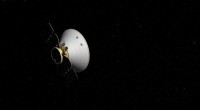
* Space probes: Unmanned vehicles sent to explore planets, moons, or other objects in the solar system.
* Space stations: Large structures in orbit designed for long-term human habitation and research.
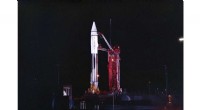
* Rockets: Vehicles that carry payloads into space, but don't necessarily orbit themselves.
* Focus on function: The emphasis is on the vehicle's purpose and its ability to operate in space.
Spaceship:
* Narrower term: Typically refers to a crewed vehicle designed for interstellar travel, meaning travel between stars.
* Emphasis on travel: The focus is on the vehicle's ability to transport humans over vast distances.
* Fictional connotation: "Spaceship" often evokes a more futuristic and imaginative image, often associated with science fiction.
In summary:
* Spacecraft: A general term for any vehicle designed for space operation.
* Spaceship: A more specific term for a crewed vehicle designed for interstellar travel, often with a fictional or futuristic connotation.
While "spaceship" is commonly used for all crewed space vehicles, it's more accurate to use "spacecraft" when discussing satellites, probes, or other unmanned vehicles.