1. Solar Wind:
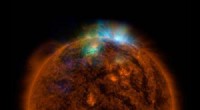
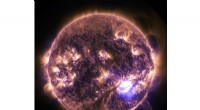
- The Sun constantly releases a stream of charged particles, known as the solar wind. This wind consists mainly of protons and electrons.
- During periods of heightened solar activity, like solar flares and coronal mass ejections, the solar wind becomes more intense and carries a greater number of charged particles.
2. Earth's Magnetic Field:
- Earth acts like a giant magnet, with its own magnetic field extending out into space. This magnetic field acts as a shield, protecting us from the harsh solar wind.
- However, some of the charged particles from the solar wind manage to penetrate Earth's magnetic field, especially near the poles where the field lines are weaker.
3. Atmospheric Interaction:
- As these charged particles enter Earth's atmosphere, they collide with atoms and molecules of gases like oxygen and nitrogen.
- These collisions excite the atoms and molecules, causing them to jump to higher energy levels.
- When these excited atoms and molecules return to their normal energy levels, they release energy in the form of light.
4. Color Spectrum:
- Different gases emit different colors of light.
- Oxygen atoms emit greenish-yellow and red light, depending on their energy levels.
- Nitrogen molecules emit blue and purple light.
- The interplay of these colors creates the vibrant, ever-changing display of the aurora.
5. Location and Shape:
- The aurora borealis is most commonly seen in the auroral oval, an oval-shaped region encircling the Earth's magnetic poles.
- The shape of the aurora can vary depending on the intensity of the solar wind and the strength of Earth's magnetic field. It can appear as curtains, rays, arcs, and even spirals.
In summary:
The aurora borealis is a mesmerizing spectacle of light created when charged particles from the Sun interact with Earth's atmosphere. The colorful display is a result of the energy released by excited atoms and molecules as they return to their normal energy levels. The intensity and shape of the aurora depend on the intensity of solar activity and the strength of Earth's magnetic field.