1. Initial Angular Momentum: Even though a nebula might appear to be stationary, it actually has a small amount of inherent angular momentum. This is due to random motions of gas particles within the nebula.
2. Collapse: When gravity causes the nebula to collapse, the material moves closer to the center, reducing its radius.
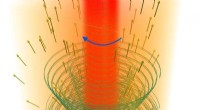
3. Conservation of Angular Momentum: To maintain constant angular momentum, as the radius decreases, the rotational velocity must increase. This is because angular momentum is directly proportional to the moment of inertia (which depends on the radius) and the angular velocity.
4. Spinning Faster: The decreasing radius results in a significant increase in the rotational velocity, causing the collapsing nebula to spin faster.
Analogy: Think about a figure skater spinning. When they pull their arms in, their radius decreases, but they spin much faster to conserve their total angular momentum.
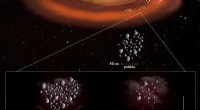
Importance: This increased spin is crucial for the formation of stars and planetary systems. The spinning cloud of gas eventually flattens into a disk, allowing material to coalesce into a star at the center, with the remaining material forming planets around it.