Here's how it works:
* Earth's Gravity: The Earth exerts a gravitational pull on everything around it, including telescopes in orbit. This pull is what keeps the telescope from flying off into space.
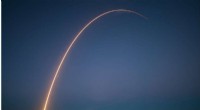
* Orbital Velocity: To counteract Earth's gravity and stay in orbit, the telescope needs to be moving at a specific speed, called orbital velocity. This velocity is just enough to ensure the telescope's path curves around the Earth instead of falling straight down.
* Circular Orbit: If the telescope's velocity is perfectly balanced with Earth's gravity, it will follow a circular orbit. This means it will travel at a constant speed and distance from the Earth.
* Elliptical Orbit: Most satellites, including telescopes, follow elliptical orbits. This means their distance from Earth varies throughout their orbit. They move faster when closer to Earth and slower when farther away.
In short, a telescope in orbit is constantly falling towards Earth, but its horizontal velocity is just enough to keep it from hitting the ground. It's like constantly throwing a ball forward, but with a curvature to its path that matches the Earth's curve.