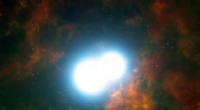
* Neutron star: A neutron star is the incredibly dense, collapsed core of a massive star that has exploded as a supernova. They are extremely small (about the size of a city) and incredibly dense, with a teaspoon weighing billions of tons.
* Pulsar: A pulsar is a type of neutron star that emits beams of radiation from its poles. These beams sweep across space like a lighthouse beam, and we observe them as pulses of radiation.
So, why the confusion?
The confusion comes from the fact that all pulsars are neutron stars, but not all neutron stars are pulsars. Here's why:
* Pulsars are rotating neutron stars: To be a pulsar, a neutron star needs to be rotating, with its magnetic poles aligned in a way that allows us to see the radiation pulses.
* Not all neutron stars rotate fast enough: Some neutron stars might rotate too slowly or have their magnetic poles oriented in such a way that we don't see the pulses.
* Some neutron stars might have lost their magnetic field: Without a strong magnetic field, a neutron star won't produce the beams of radiation necessary to be classified as a pulsar.
In summary: Think of it this way:
* All pulsars are neutron stars (because they are the collapsed cores of massive stars)
* But not all neutron stars are pulsars (because they might not be rotating fast enough or have the right magnetic field alignment to produce detectable pulses).
I hope that clears up the confusion!