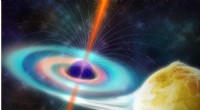
1. Neutron Stars:
* Formed from the collapse of massive stars (8 to 20 times the mass of our Sun).
* Extremely dense, with a diameter of only a few kilometers but containing a mass several times that of our Sun.
* Composed primarily of neutrons packed together tightly.
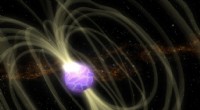
* Can have very strong magnetic fields and rotate rapidly, emitting radio waves (pulsars) or X-rays.
2. Black Holes:
* Formed from the collapse of extremely massive stars (over 20 times the mass of our Sun).
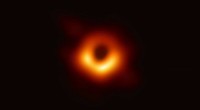
* So dense that gravity prevents even light from escaping.
* Have immense gravitational pull, attracting surrounding matter and forming accretion disks.
* Emit X-rays and other radiation as material falls into them.
Other types of remnants:
* Supernova Remnants (SNRs): This is a broader category that encompasses the expanding cloud of gas and dust left behind after the explosion. They can persist for thousands of years and are often visible as faint nebulae.
* Pulsar Wind Nebulae (PWNe): These are nebulae created by the energetic winds from pulsars.
It's important to note that the specific type of remnant depends on the mass of the original star and the nature of the explosion. Not all supernovae result in neutron stars or black holes. Some may leave behind only an expanding shell of gas and dust, forming a supernova remnant.