Stars are born, live, and die in a grand cosmic cycle, driven by the fundamental forces of gravity and nuclear fusion.
Birth:
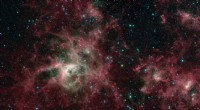
* Giant Molecular Clouds: Stars are born within vast, cold, and dense clouds of gas and dust called giant molecular clouds. These clouds are mostly hydrogen and helium, with traces of heavier elements.
* Gravitational Collapse: Within these clouds, gravity pulls matter together, slowly forming denser regions called "cores". As the core grows, its gravity intensifies, leading to faster collapse.
* Protostar Formation: The collapsing core becomes a protostar, a hot, dense sphere of gas and dust. This protostar continues to accrete material from the surrounding cloud.
* Nuclear Fusion Ignition: The intense pressure and temperature at the core of a protostar reach a critical point where hydrogen atoms begin fusing to form helium, releasing immense energy. This marks the birth of a true star.
Life:
* Main Sequence: The vast majority of a star's life is spent in the main sequence, where it fuses hydrogen into helium in its core. The star's size, temperature, and lifespan are determined by its mass.
* Stellar Evolution: As a star ages, it gradually runs out of hydrogen fuel in its core. The core contracts, becoming hotter and denser, while the outer layers expand.
* Red Giant Phase: The star enters the red giant phase, becoming larger, cooler, and redder. This is due to the expansion of the outer layers and the burning of hydrogen in a shell around the core.
Death:
The death of a star depends on its initial mass:
* Low-mass stars (like our Sun):
* Red Giant: The star expands into a red giant, eventually shedding its outer layers as a planetary nebula.
* White Dwarf: The remaining core collapses into a dense, hot, and very small white dwarf, slowly cooling over billions of years.
* Medium-mass stars (slightly larger than the Sun):
* Red Supergiant: These stars evolve into red supergiants, undergoing further nuclear fusion processes in their cores.
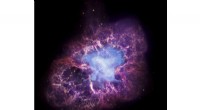
* Supernova: Eventually, the core collapses, triggering a massive explosion called a supernova.
* Neutron Star: The remnants of the supernova collapse further, forming a dense neutron star.
* Massive stars (several times more massive than the Sun):
* Red Supergiant: These stars also evolve into red supergiants, undergoing multiple stages of nuclear fusion.
* Hypernova: Their cores collapse, triggering a super-intense explosion called a hypernova.
* Black Hole: The core collapses beyond the point of a neutron star, forming a black hole, a region of spacetime with such intense gravity that nothing, not even light, can escape.
Stellar Remnants:
The remnants of dead stars – white dwarfs, neutron stars, and black holes – continue to exist in the universe, playing a vital role in the cosmic cycle. They can release energy through various processes and contribute to the formation of new stars and planets.
This is a simplified overview of the life and death of stars. The process is complex and depends on many factors, but it highlights the grand and beautiful cycle of star formation and evolution in the universe.