* Charged particles: Individual charged particles, like protons, electrons, or ions, do have magnetic fields. This is due to their motion and inherent electric charge. However, these fields are generally very weak and localized around the particle.
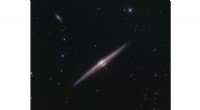
* Astrophysical objects: Larger objects like stars, planets, and galaxies also have magnetic fields, but these are generated by the movement of charged particles within them.
* Stars: Have strong magnetic fields generated by the motion of charged particles within their interiors.
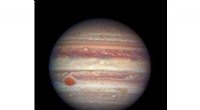
* Planets: Some planets, like Earth, have magnetic fields generated by the movement of molten iron in their cores.
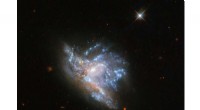
* Galaxies: Have weak, but massive, magnetic fields that are generated by the motion of charged particles in interstellar gas and cosmic rays.
* Cosmic rays: High-energy particles traveling through space, mainly protons, also have magnetic fields. These fields are generated by their motion and electric charge.
Important Note:
* The magnetic field of individual particles is much weaker than the magnetic fields generated by astrophysical objects.
* The magnetic fields of particles in space can interact with each other and with other magnetic fields. This interaction can have a significant impact on the behavior of particles and the evolution of astrophysical objects.
In summary, the magnetic field of particles in space is determined by the nature of the particle, its motion, and the environment it's in.