1. No Rotation: For days and nights to occur, the Earth needs to rotate on its axis. A flat Earth wouldn't have the same rotational properties. It would likely need a different mechanism to explain the apparent movement of the Sun across the sky.
2. Sun's Position: With a flat Earth, the Sun's position wouldn't be consistent. There's no way to explain how a single Sun could illuminate a flat plane from different angles throughout the day, creating the illusion of sunrise, midday, and sunset.
3. No Seasons: Seasons are caused by the Earth's tilt on its axis and its orbit around the Sun. A flat Earth wouldn't have the same tilt, so it wouldn't experience seasons.
4. Lack of Gravity: The idea of a flat Earth contradicts the laws of gravity. A flat Earth would have to have a different, unexplained gravitational force that somehow keeps everything on the surface. This force would also have to be much stronger to hold the Earth together.
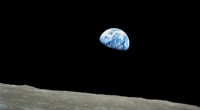
5. The Horizon: The horizon we see on a flat Earth would be a straight line, not a curved line as we observe. This curvature is a key indicator of the Earth's spherical shape.
In summary: The flat Earth theory is not scientifically viable, and it doesn't provide a plausible explanation for the existence of days and nights, seasons, or the Earth's overall structure and behavior.